Eye Portrait Tattoos in Durham, NC — What to Expect From Booking to Healed
If you've been thinking about an eye portrait tattoo, you've probably spent time looking at reference images, wondering what the process actually looks like from start to finish. This post walks through exactly that — what to bring, what to expect during the session, and how to take care of the work afterward so it heals the way it's supposed to.
Brian Parrillo has been tattooing realism portraits in Durham, NC for over a decade. Eyes are among his most requested subjects and one of his strongest areas — clients consistently describe his eye work as having genuine life and a characteristic wetness that makes the iris look like it's catching real light.
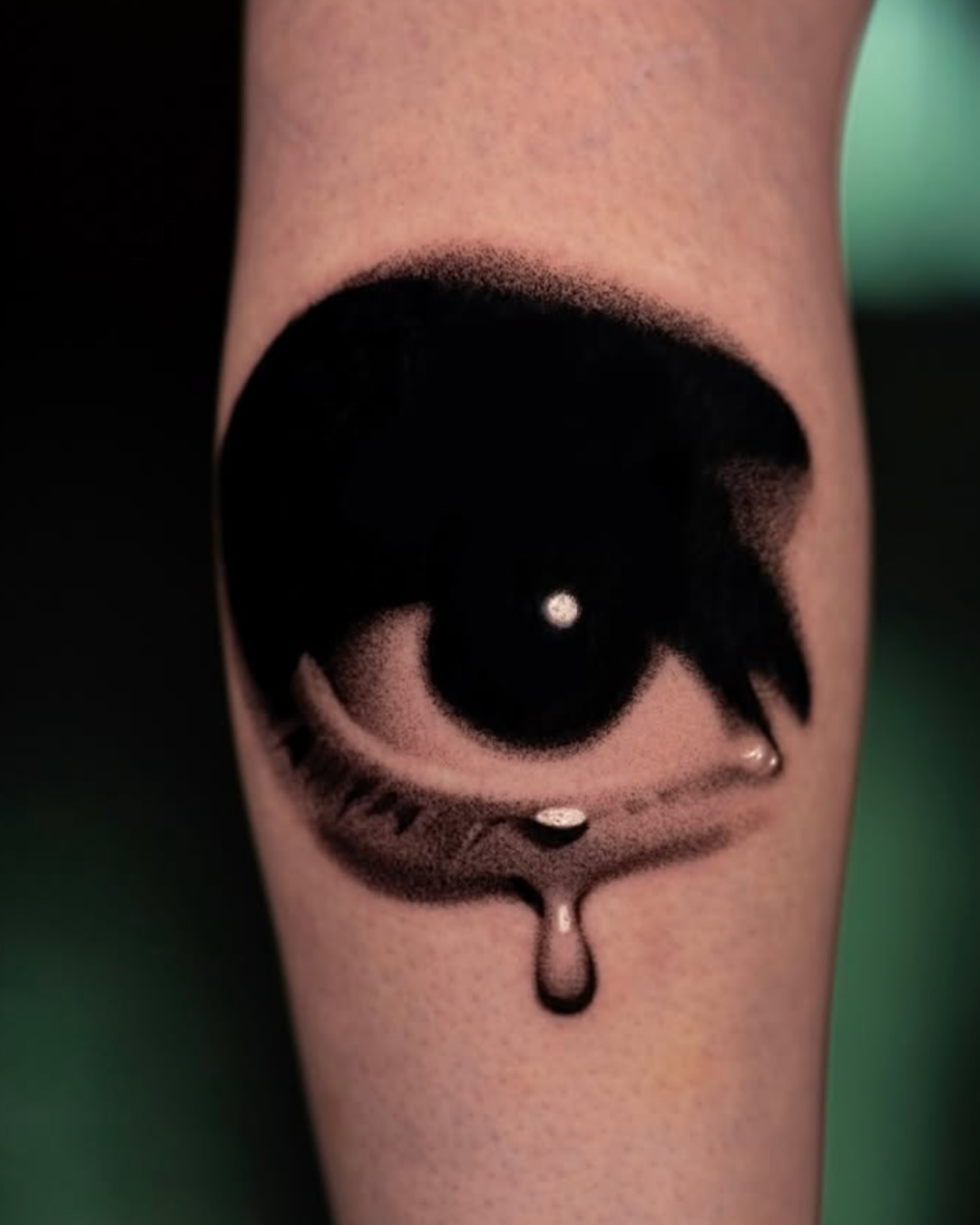
Realistic black and grey eye tattoo with tear drop detail on forearm by Brian Parrillo Durham NC
The Reference Photo
Everything starts here. For an eye portrait tattoo, the reference photo isn't just helpful — it's the foundation the entire piece is built on. A sharp, well-lit photo with clear detail in the iris, visible catchlights, and defined lashes gives Brian the raw material to work from. A blurry, low-contrast, or poorly lit image forces guesswork, and in a subject this unforgiving, that shows in the finished piece.
A few things that make a strong eye reference:
Natural or controlled lighting works best — harsh direct flash flattens the eye and eliminates the depth that makes realism possible. Soft, directional light that creates shadow and highlights is ideal. The photo should be in focus at the iris level specifically, not just the face overall. High resolution matters — if you're pulling from social media, find the original source rather than a compressed version.
For clients who want the strongest possible starting point, Brian offers portrait tattoo reference photoshoots — a dedicated service that produces photos built specifically for realism tattooing.
Choosing the Right Placement
Eye tattoos reward flat, stable skin. The outer forearm, upper arm, thigh, and calf are all strong choices — they preserve proportions well and hold fine detail reliably over time. Areas with significant curvature or frequent movement can distort the subtle relationships between elements that make an eye read correctly.
Size is the other major consideration. Bigger is almost always better for this subject. A realism eye needs room for the layered shading that creates depth — the catchlight, the iris texture, the gradients around the whites. Compressing that into a very small space is possible but limits what's achievable in terms of detail and longevity.
If you're unsure about placement or sizing, that's exactly what the consultation is for.
The Booking Process
Brian works on a project-based flat rate rather than an hourly model. Once you submit a booking request through the booking page, he'll review your concept, reference photos, and placement, and provide a price estimate before anything is confirmed. A $500 deposit is required to secure your appointment and is applied to the final cost of the tattoo.
Brian designs each piece from scratch based on your reference and the specifics of your project — he doesn't use pre-made templates or AI-generated designs. The design is prepared before your appointment and presented at the start of your session, with time built in for minor adjustments.
The Session
Eye portrait tattoos at the scale Brian works — medium to large, which he recommends for this subject — are typically completed in a single session. The session begins with reviewing and finalizing the design, transferring it to your skin, and adjusting placement before anything is permanent.
The work itself involves building up layers of shading gradually, working from lighter values toward the deepest blacks, with the catchlight and fine details of the iris saved for later in the process. For clients, the main job during the session is staying still, staying hydrated, and eating beforehand.
Healing and Aftercare
Realism tattoos — and eye work in particular — require consistent aftercare to heal correctly. Fine detail and subtle gradients are the first things to suffer if the healing process is disrupted.
The basics: keep the tattoo clean and moisturized during the initial healing period, avoid sun exposure on the fresh tattoo, don't pick or scratch at peeling skin, and stay out of pools, lakes, and saltwater until the surface is fully healed. Brian provides specific aftercare instructions at your appointment.
One thing worth knowing about realism: the tattoo will look different at various stages of healing. There's typically a period where it looks faded or slightly washed out as the skin settles. This is normal. The final healed result — which is what actually matters — usually takes four to six weeks to fully reveal itself.
What the Healed Work Looks Like
The qualities that define Brian's eye work — the sense of depth, the wetness, the impression of light actually hitting a curved surface — hold up in the healed piece when the aftercare is done right. You can see fresh examples throughout his eye portrait tattoo portfolio and across his human portrait and pet portrait galleries. He also has a healed tattoo gallery.
Written by Brian Parrillo — Tattoo artist with 11+ years of experience specializing in black and grey realism, portrait tattoos, and pet portrait tattoos at Ethereal Tattoo Gallery, Durham, NC. Featured in the Raleigh News & Observer. Learn more about Brian →