What Is a Single Needle Tattoo?
If you've been researching fine line or microrealism tattoos, you've probably come across the term single needle. It gets used a lot — sometimes accurately, sometimes as a vague shorthand for anything delicate or detailed. Here's a clear breakdown of what it actually means, how it differs from other fine line techniques, and how to know whether it's the right choice for your project.
What Single Needle Actually Means
A tattoo needle configuration refers to how many needles are grouped together at the tip of the needle cartridge. Most tattooing uses groupings — a 3 round liner (3RL), 5 round liner (5RL), and so on — where multiple needles work simultaneously to deposit ink. A single needle tattoo uses exactly one needle. Just one point of contact with the skin.
That single point produces an extremely fine line — thinner than almost anything achievable with a grouped configuration. It also deposits less ink per pass, which is what allows for the soft, subtle gradients and delicate shading that define the single needle aesthetic.
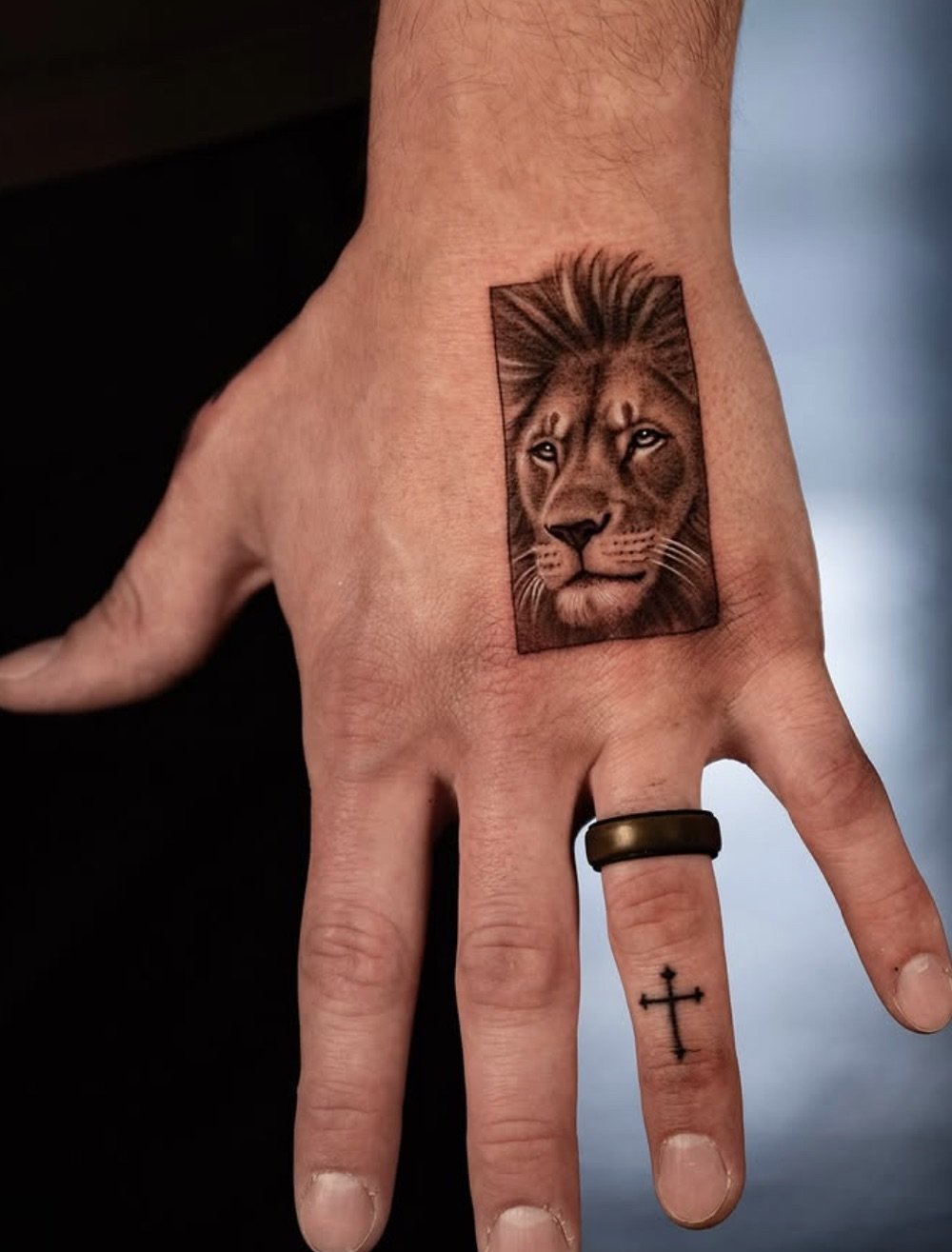
Single needle microrealism lion portrait tattoo on the back of a hand by Brian Parrillo Durham NC
What Single Needle Is Good For
Single needle work excels at a specific set of things: very fine linework, subtle detail at small scale, soft texture work, and pieces where a light, almost etched quality is the goal. It's particularly well suited to small portraits, detailed botanical work, script, and certain styles of microrealism where the aim is precision over saturation.
The technique is genuinely difficult. One needle means no margin for error — there's no grouping of needles to smooth out slight variations in pressure or angle. Every line is exactly what it is. Artists who do it well have typically put in years developing the control it requires.
What Single Needle Is Not Good For
Single needle isn't always the right tool. For larger pieces that require bold contrast, solid blacks, or significant shading volume, grouped needle configurations deliver better results more efficiently. Single needle work on a large scale can also be more prone to fading over time, since the lower ink deposit means less saturation in the skin.
It's also not the only way to achieve fine, detailed results. A skilled artist working with a 3RL or similar fine configuration can produce work that's just as precise for many subjects — and may hold up better over time depending on the design.
How Brian Approaches It
Brian uses single needle when the project calls for it — typically for pieces where extreme delicacy is the goal, or where the subject requires a level of fine detail that benefits from that single point of contact. For other fine line and microrealism work, he uses configurations like 3RL that allow for more control over shading and longevity depending on the subject and scale.
The choice of needle configuration isn't something clients need to direct — it's a technical decision made based on what will produce the best result for your specific piece. What matters is understanding what you're after aesthetically and communicating that clearly in consultation.
You can see Brian's fine line and microrealism work across his custom tattoo portfolio, including his pet portrait tattoos and human portrait tattoos, where fine detail and precise needle work are central to the result.
Single Needle vs. Microrealism — Are They the Same Thing?
Not exactly, though they overlap. Microrealism is a style — photorealistic imagery executed at small scale with fine detail. Single needle is a technique. Microrealism work is often done with single needle or fine needle configurations, but microrealism can also be executed with other tools depending on the artist and the project.
If you're searching for microrealism, what you're describing is a style outcome. If you're searching for single needle, you're describing a technical method. Many clients who search for one are actually interested in both — they want small-scale, highly detailed, realistic work that looks refined rather than bold or saturated. Brian's microrealism animal tattoo work is a good example of how the two overlap in practice — fine needle technique in service of small-scale realism.
That's exactly the kind of work Brian specializes in. If you're considering a microrealism or fine line tattoo in Durham, NC, booking information is here.
Written by Brian Parrillo — Tattoo artist with 11+ years of experience specializing in black and grey realism, portrait tattoos, and pet portrait tattoos at Ethereal Tattoo Gallery, Durham, NC. Featured in the Raleigh News & Observer. Learn more about Brian →