Cover-Up Tattoos in Durham, NC
We get so many calls, texts, and emails these days from folks looking for cover-up tattoos.
Brian Parrillo, a black and grey realism artist at Ethereal Tattoo Gallery in downtown Durham, doesn't take on cover-up tattoo work often. But when a project gives him the creative freedom to build something he's proud of, the results speak for themselves.
If you’re looking for the best cover-up tattoo artist, read through the following information to see if Brian may be a fit. As a custom tattoo artist working in fine line realism, Brian is extremely selective with cover-up projects. We may recommend that you seek an artist who specializes in cover-ups, specifically, if we do not believe the project would be a good artistic match.
If you think Brian may be a fit for your cover-up tattoo project, the first step is to fill out the form here so Brian can do an initial review.
Why Most Realism Artists Turn Down Cover-Ups
A successful cover-up has to be larger and darker than the tattoo it's replacing.
Fine line and detailed black and grey realism — the style Brian specializes in — relies on delicate linework, soft shading, and light-to-dark range to look photorealistic. That's the opposite of what most cover-ups require, which is why realism specialists like Brian are selective about which cover-up projects they'll take.
When Brian May Take a Cover-Up Project
Brian takes on a limited number of cover-ups, and only under the right conditions:
The new piece can be larger and darker than the old tattoo — enough room and enough contrast to fully build over what's there.
Prior laser lightening opens up options. If an existing tattoo has had one or more laser sessions to fade it, the design possibilities expand significantly — lighter saturation gives Brian more room to work with realism techniques instead of relying purely on size and darkness.
Creative freedom. Brian needs latitude to design the piece the way it needs to be designed to succeed as a cover-up — not just placed on top of the old tattoo, but built around it.
Confidence in the outcome. If Brian isn't confident the final piece will stand on its own as strong artwork, he'll say so during consultation rather than take the project.
If your existing tattoo doesn't meet these conditions yet, laser lightening sessions beforehand are often the path that makes a realism cover-up possible later.
What to Expect
Cover-up projects are evaluated case by case. During a free consultation, Brian will look at the existing tattoo's size, placement, and saturation, and talk through whether a strong realism cover-up is achievable now or whether laser lightening sessions would open up better options first. Every cover-up is priced individually based on the scope of the piece.
Example Cover-Up Project
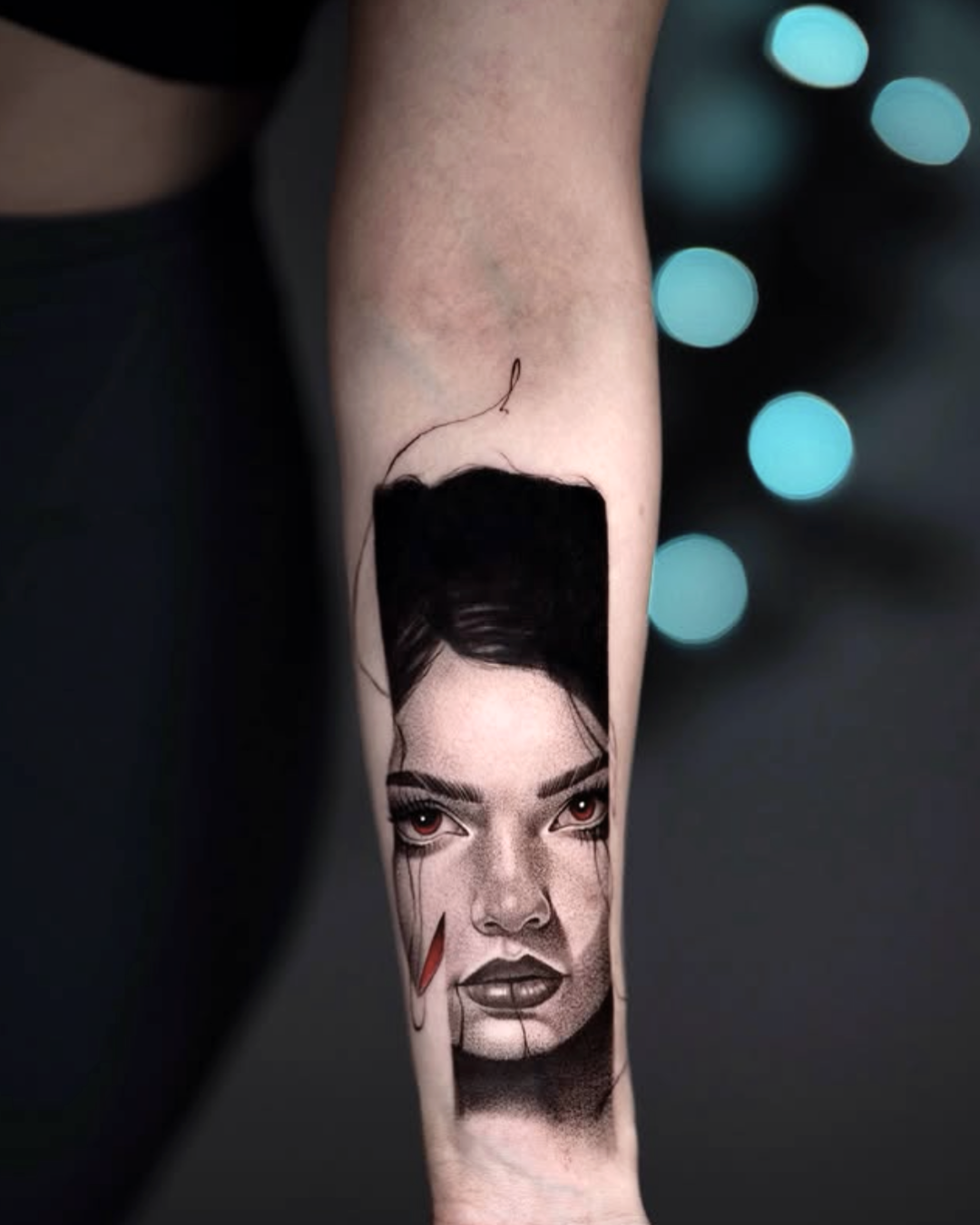
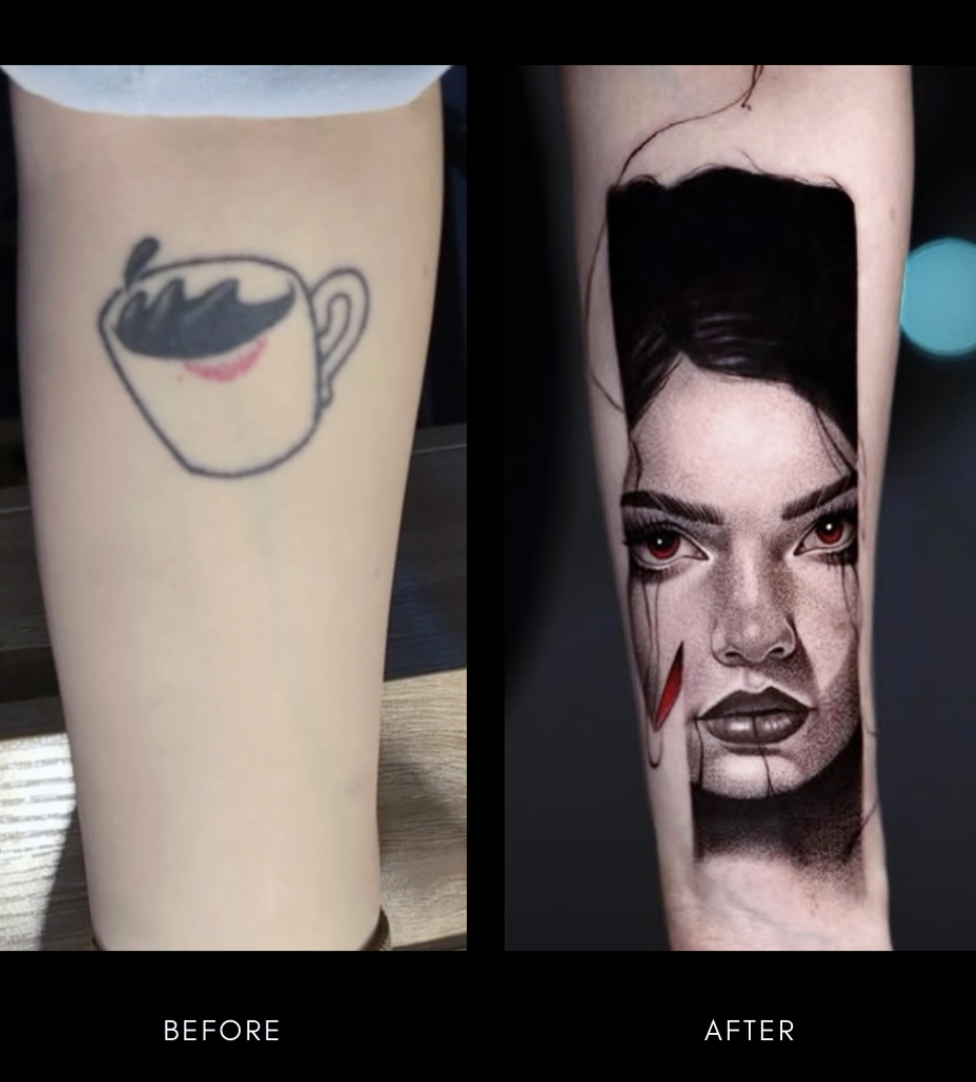
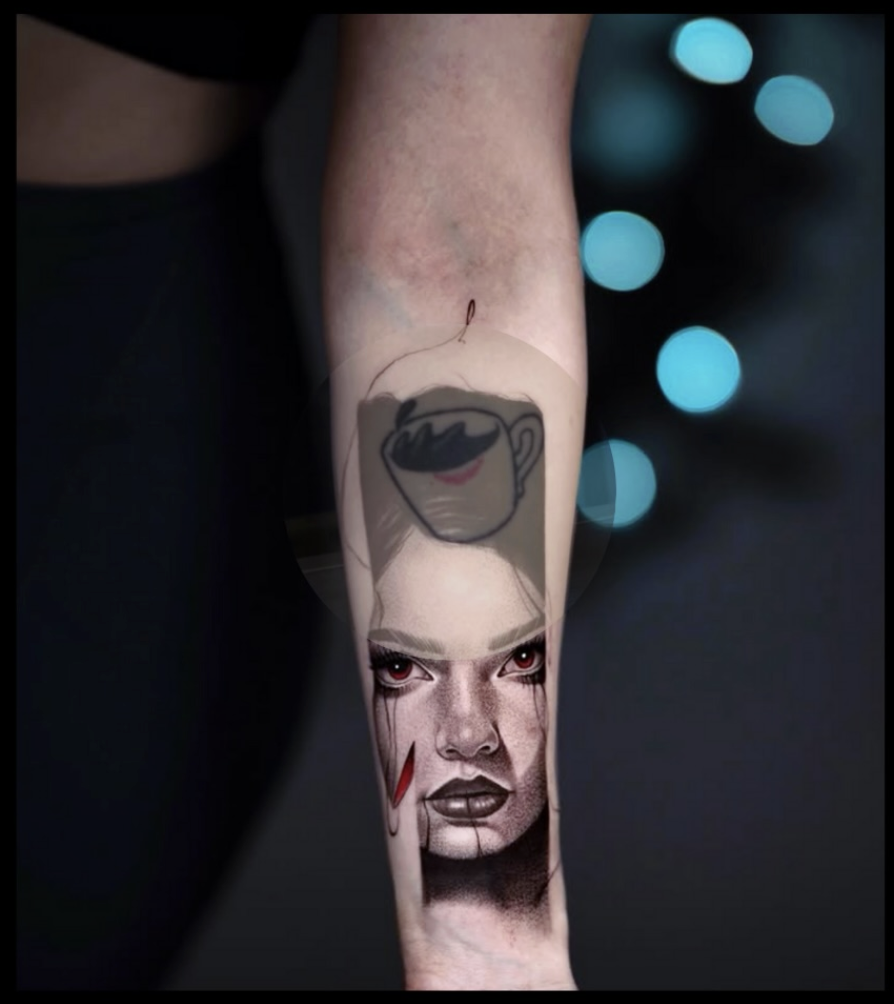
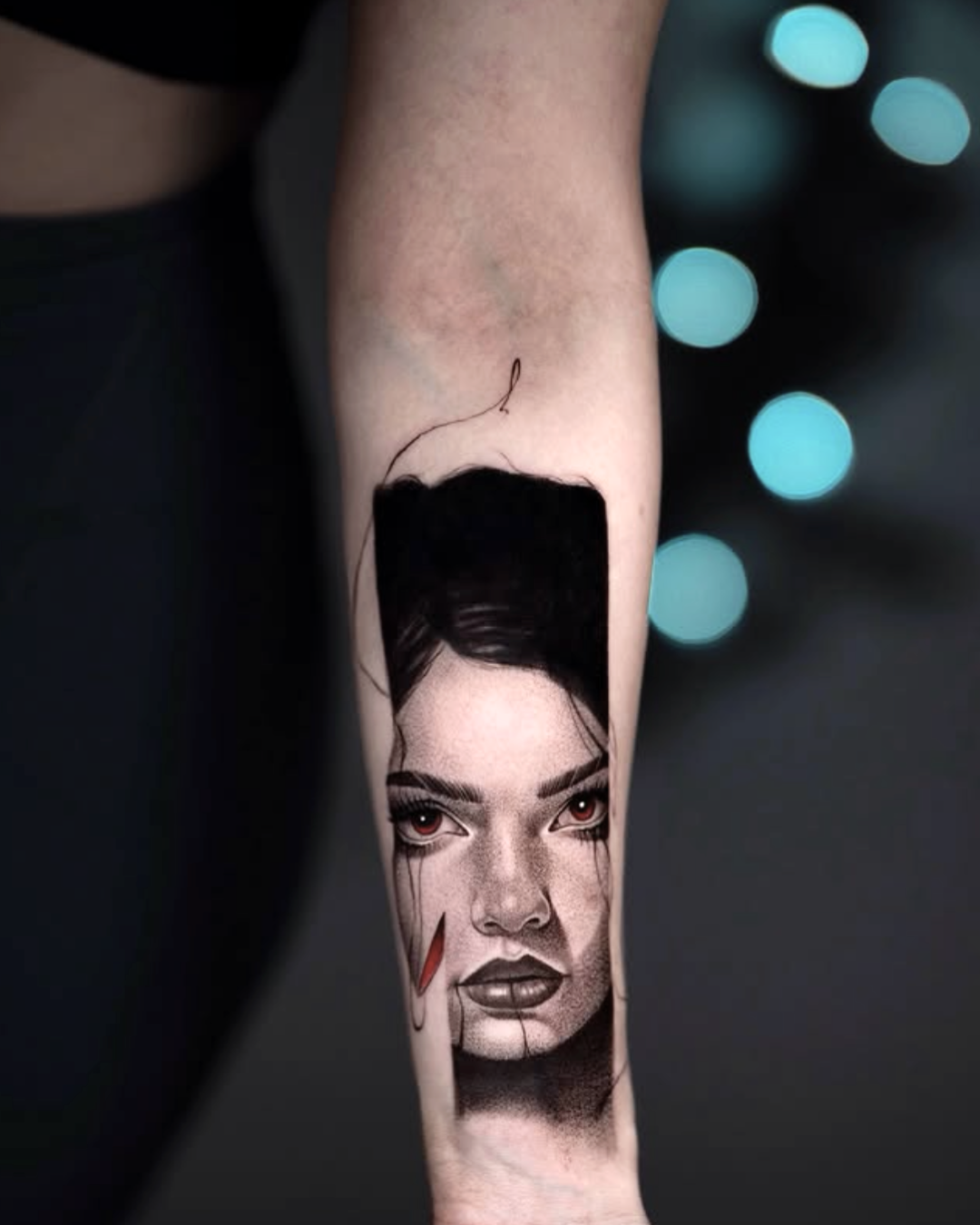
This client came in with a couple of small, bold-line tattoos they no longer wanted, including a simple (but bold/dark) coffee cup design on the forearm. Working with full creative freedom, Brian covered it with a detailed black and grey realistic portrait based on one of his wanna do pre-drawn designs, using the size and value range of the new piece to fully absorb the original linework. The result reads as a standalone realism piece.
(See more information about this project on Ethereal Tattoo Gallery's Instagram.)
FRESH
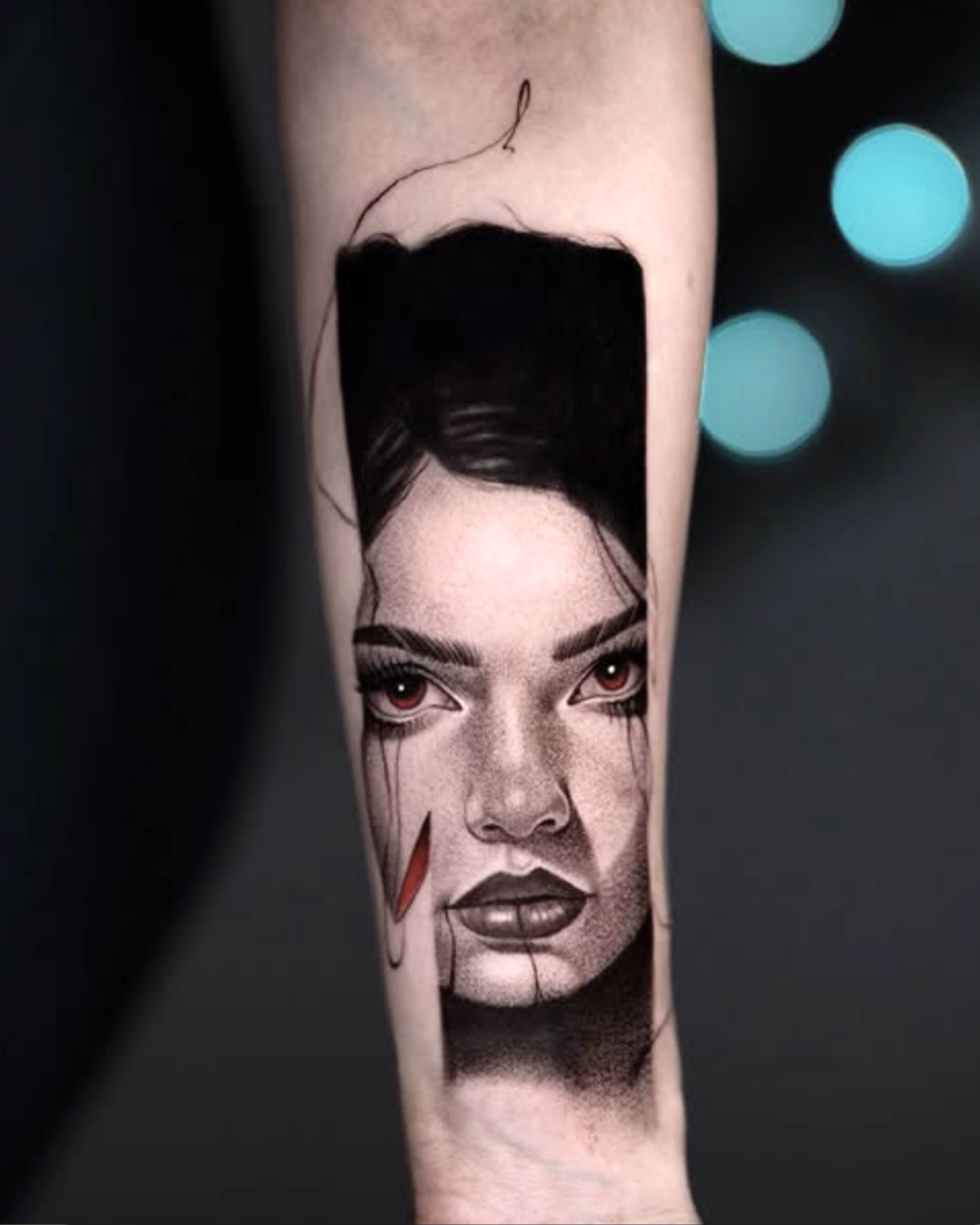
FRESH
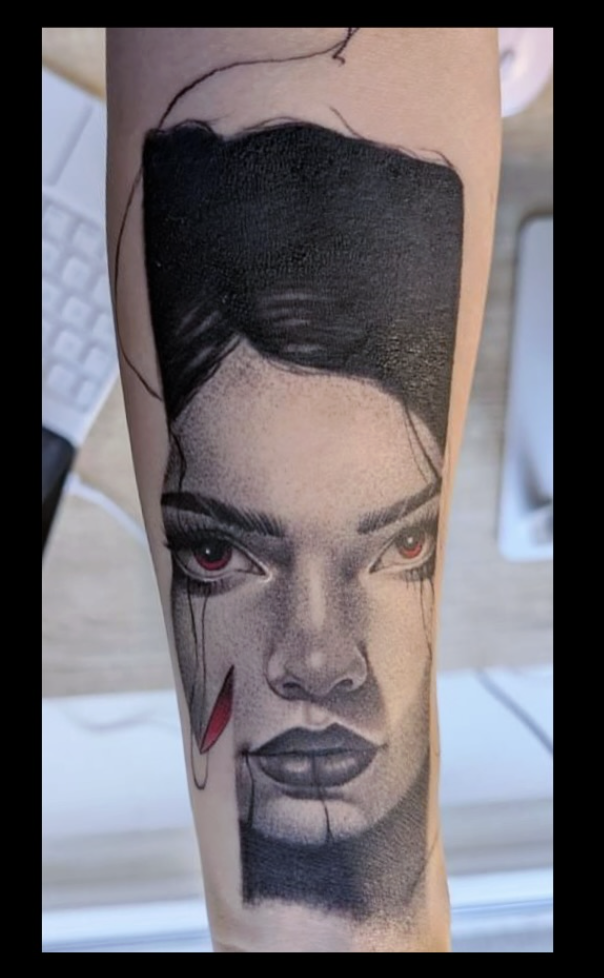
HEALED (CLIENT PHOTO)
Frequently Asked Questions
-
Brian takes a limited number of cover-up projects — only when the design can realistically be built larger and darker than the existing tattoo, with enough creative freedom to make it a strong stand-alone piece. Submit a consultation request through the booking page with photos of your existing tattoo, and Brian will let you know if it's a good potential fit.
-
Yes. Even partial laser fading can significantly expand what's possible for a cover-up, since it reduces the saturation Brian has to design around. Clients considering a realism-style cover-up are often better served getting one or more laser sessions first, then coming back for a consultation.
-
It can, but it depends on the existing tattoo's size and darkness relative to the new design. Detailed realism relies on a wide value range and fine shading, so it works best as a cover-up when there's enough room to build a larger, darker piece — or when the original has been lightened first.
-
A cover-up conceals an old tattoo with new artwork in a single project, while laser removal fades or eliminates the old tattoo over multiple sessions without adding new ink. The two are often used together: partial laser fading followed by a cover-up gives an artist like Brian more room to work with realism techniques instead of relying purely on size and darkness to hide the original.
-
Cover-up pricing depends on size, placement, and how much redesign work is required — see the pricing page for how Brian's rates work. Keep in mind these rates are starting points and cover-up tattoos may be priced higher than typical bespoke tattoo designs on blank skin due to the inherent challenges with cover-up tattoo work.
-
Brian tattoos at Ethereal Tattoo Gallery, 730 Rigsbee Ave, Durham, NC 27701. He works with clients from across North Carolina and the East Coast.
-
It depends on the size and complexity of the new design. Brian works one client per day in full-day sessions, so most cover-ups are planned around full-day appointments. Because these are generally larger pieces, most take several sessions.
-
No. Some existing tattoos are too dark, too saturated, or too large relative to the available skin to cover well right away. In those cases, one or more laser lightening sessions beforehand can open up options that wouldn't otherwise be possible.