What Photo Do You Need for a Pet Portrait Tattoo?
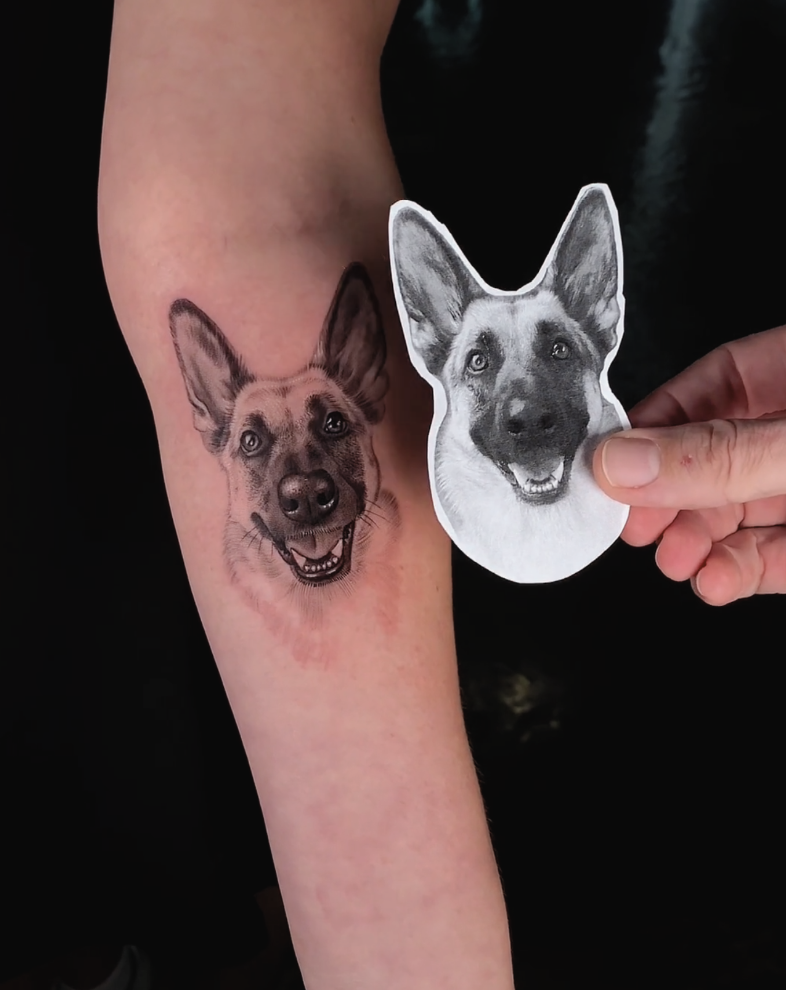
Side-by-side reference photo and healed black and grey realism pet portrait tattoo by Brian Parrillo.
The best photo for a pet portrait tattoo is a sharp, high-resolution original, taken in soft natural light at your pet's eye level, with both eyes in focus. Send several photos rather than one: Brian Parrillo selects the image he can work with best, because photo quality is the biggest factor in how realistic the finished portrait looks.
Have your photos ready? Upload them with your request on Brian's booking page, and he will tell you which ones work.
What makes a photo good enough for a realistic pet portrait?
A usable reference photo shows fine detail clearly enough that Brian can see every hair direction, marking, and reflection in the eyes. Check your photos against this list:
The eyes are sharp. Zoom in. You should see the edge of the iris and a small reflection of light, called a catchlight.
The light is soft and even. Window light or an overcast day works best. Harsh flash and direct midday sun flatten fur and blow out highlights.
The camera is at eye level. Photos taken from above distort the head and shrink the body.
The face fills the frame. A small dog across a large yard will not hold enough detail, even when cropped.
The fur texture is visible. If you cannot see individual strands when you zoom in, the tattoo cannot show them either.
It is the original file. Not a screenshot, and not a copy saved from social media.
Why does photo quality matter so much in a realism tattoo?
Realism can only show what the photo shows. Brian builds each portrait by hand while studying your reference, so any detail lost to blur or shadow becomes guesswork, and guesswork weakens likeness. This matters most in the eyes, which carry most of a portrait's expression; see why eyes are the hardest part of a realism portrait.
It is also why black and grey realism looks so lifelike when the reference is strong: the full range of tones in a good photo becomes the smooth gradients described in this black and grey realism style guide.
Can you use an old, blurry, or sentimental photo?
Sometimes. Brian can sometimes enhance a poor-quality photo, but not always, and enhancement is a last resort rather than a plan. If a photo is too blurry, low quality, or poorly lit, he may not be able to use it.
Many clients are attached to one photo for sentimental reasons, especially for memorial pieces. The best approach is to send that photo along with every other clear photo you have. Brian works from multiple photos, so a sharp photo can often supply detail that the favorite photo is missing. For memorial pieces, see what to expect with memorial portrait tattoos.
Why should you send the original file instead of a screenshot?
Screenshots and social media copies throw away detail. Instagram, for example, sizes photos down to a width of 1080 pixels, far smaller than the original from a modern phone. Look for the original in your camera roll or cloud backup, or ask whoever took the photo to send you the full-size file.
Not sure your photos are good enough? Send what you have. Free consultations are available by email or FaceTime through Brian's booking form.
How do you take a new photo of your pet for a tattoo?
If your pet is with you, a new photo session is the best investment you can make in the tattoo. Use these steps:
Sit near a large window in daytime, or go outside on an overcast day.
Get down to your pet's eye level.
Hold a treat or toy just above the lens to get an alert expression.
Use burst mode and take dozens of shots.
Turn off portrait mode, which can artificially soften fur edges.
Take close-ups of distinctive markings as well as the full face.
For human portraits, Brian also offers portrait tattoo reference photoshoots with controlled lighting and composition.
Pet portrait photo FAQ
Can Brian combine details from different photos? Yes. Brian works from multiple photos and selects the ones he can work with best, so send every clear photo you have.
Should I send color or black and white photos? Send the original color photo. It holds more information than a black and white edit, and Brian handles the translation into black and grey.
Can I send an AI-enhanced version of a blurry photo? Send the original as well. AI enhancement can add details that were never in the photo, which may not match your pet.
How long does the tattoo itself take? Brian's signature 3 to 4 inch pet portrait takes 4 to 5 hours. For more on choosing the right artist, see how to choose a pet portrait tattoo artist.
What does a pet portrait tattoo look like when it is finished? See healed and fresh examples on Brian's pet portrait tattoos page.
Great photos make great portraits. Send your photos and request your pet portrait with Brian.
Written by Brian Parrillo — Tattoo artist with 11+ years of experience specializing in black and grey realism, portrait tattoos, and pet portrait tattoos at Ethereal Tattoo Gallery, Durham, NC. Featured in the Raleigh News & Observer. Learn more about Brian →